Target September 2026 / Vehicle buildout
Building the first mobile diagnostics vehicle
The first VitalScan unit is being planned around the constraint that matters most: fitting a real DEXA workflow into a mobile clinic that still feels clean, calm, and operational.
Build priority: DEXA bay, power, HVAC, storage, and host-site support
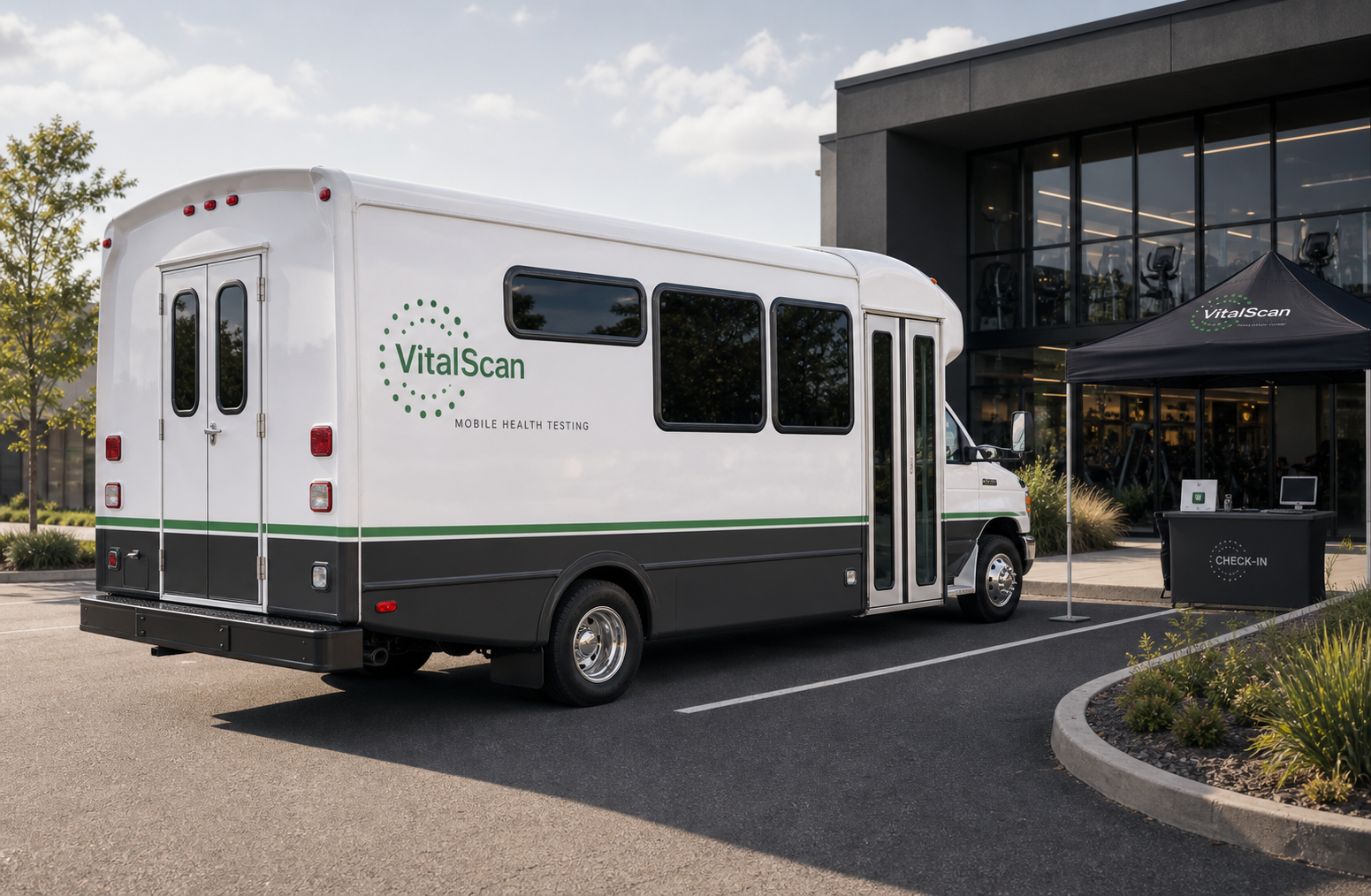
The vehicle is not a backdrop. It is the controlled part of the testing day.
Why the vehicle choice matters
A mobile diagnostics unit is only believable if the equipment fit is believable. DEXA is the hardest constraint because the scanner is long, wide, heavy, and needs a controlled operator workflow around it.
The launch direction is a Ford/Starcraft cutaway body instead of a narrower cargo van. The wider box gives the team a better chance to design around the Hologic Discovery-style scanner, operator station, patient movement, privacy, storage, lighting, power, and HVAC.
The DEXA bay
The scanner sits at the center of the vehicle plan. The space needs a stable floor, clean surfaces, clear operator access, privacy, conditioned power, and enough room for a customer to enter, position, scan, and exit without the workflow feeling improvised.
The goal is not to turn the vehicle into a hospital room. It should feel focused and clinical: durable floor, organized storage, simple lighting, clean wall panels, minimal visual noise, and a clear distinction between scan space and support space.
What happens outside the vehicle
Not every part of the testing day belongs inside the DEXA bay. Check-in can happen at a host-site arrival station. Bloodwork can happen in a private room or screened recovery space. VO2/RMR can happen on the gym floor when the host has suitable open space.
For winter or overflow operations, the plan includes an enclosed heavy-duty tent with sidewalls, mat flooring, heat, power routing, and controlled setup. The vehicle anchors the clinical workflow, while the host site gives the day enough flexibility to work in real locations.
What has to be true before launch
The vehicle still has to clear practical questions: final body dimensions, anchoring, floor structure, leveling, electrical load, power conditioning, HVAC, equipment service access, insurance, and state-specific operating requirements.
That is why the vehicle work is being paired with host outreach and early-access demand capture now. When the unit is ready, the route should already have a short list of qualified hosts and customers waiting for the first dates.
Next step
Follow the September launch buildout.
VitalScan is collecting early customer demand and host-location interest while the first diagnostics vehicle and operating partner stack come together.